
Conditions
Acne
Reviewed by Carmen Farrugia — Advanced Diploma of Naturopathy, and an AHPRA-registered midwife (NMW0001034617)
Last updated
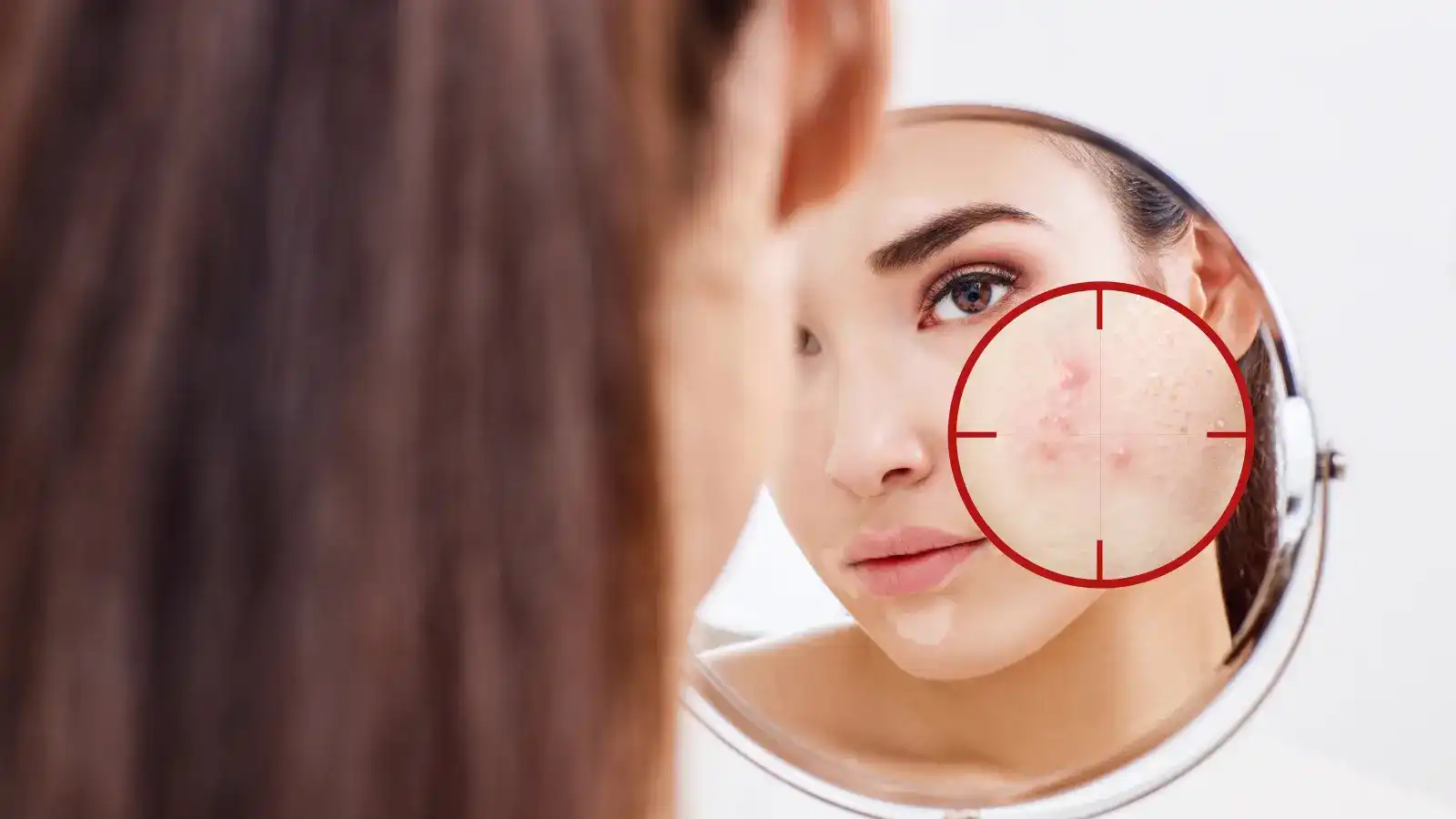
Acne involves the oil glands in your skin — the sebaceous glands — and the hair follicles they sit beside. When a gland gets blocked, oil accumulates and a pimple forms at the base of the follicle. That’s what produces blackheads, whiteheads, cysts and pustules. The skin around it becomes inflamed and infected, and in some cases genuinely painful.
It can appear anywhere on the body. The face, neck, upper back and arms are the usual places.
The four types you’re most likely to have
Pustules are red bumps with pus at the top. These are the most common.
Blackheads are an oil-filled mass at the base of the follicle. The colour isn’t dirt — it’s the oil oxidising on contact with air.
Whiteheads are a blocked pore covered by a layer of skin, usually where oil and skin cells have hardened together.
Cysts are lumps under the skin filled with oil and pus. They’re red, they hurt, and they’re the type most likely to scar.
What sets it off
Diet, stress and hormonal change are the three that come up most. Puberty, pregnancy and ovarian conditions all shift hormone levels, and androgens in particular tell the oil glands to enlarge — which is exactly what makes them easier to block.
Genetics, skin sensitivity and what you’re putting on your skin all play a part too. So does anything that stops skin breathing: synthetic fabrics, tight headbands, caps, dusty environments.
Your skin is the largest organ you have. It’s roughly 15% of your body weight and covers one to two square metres, so it isn’t surprising that what happens internally shows up on it.
Twelve things worth trying
- Drink plenty of water. A squeeze of fresh lemon makes it more pleasant.
- Wash your face twice a day with a gentle, natural product.
- Wash after exercise, so sweat and dirt aren’t sitting on the skin.
- Don’t squeeze, and try not to touch your face.
- Skip harsh chemical products and heavy make-up that block follicles.
- Change your pillowcase every two or three days.
- Eat plenty of vegetables and fruit.
- Exercise — it moves nutrients around and helps the body clear waste.
- Avoid synthetic fabrics, tight headbands and caps against the skin.
- Introduce new skincare one product at a time, so you can tell what triggers a breakout two days later.
- Avoid dusty environments where you can.
- Have your hormone levels looked at, particularly if something else is going on with your health.
When it’s worth seeing a naturopath
If your skin hasn’t responded to the obvious changes, or if it’s flaring alongside irregular periods, digestive symptoms, fatigue or stress, that pattern is worth investigating rather than treating as separate problems.
Your naturopath will take a full history — diet, stress, sleep, cycle, what you’ve already tried — and where it’s clinically appropriate may suggest hormone testing or pathology to look at what’s driving it. Nutritional and herbal support is chosen from there, not before.
Skin often reflects what’s happening in the gut, so if you also have bloating, irregular bowel habits or a history of antibiotics, expect your naturopath to ask about that too.
Frequently asked questions
Can adults get acne, or is it just a teenage thing?
Does what I eat actually affect my skin?
Does squeezing pimples make acne worse?
Should I take a supplement for my skin?
Ready to book?
Appointments Monday to Saturday, with confirmation by SMS.
Your first appointment is 60 minutes and $160— every consultation fee · what to expect at your first appointment